
Naturopath Insights: How Alcohol Influences Your Skin
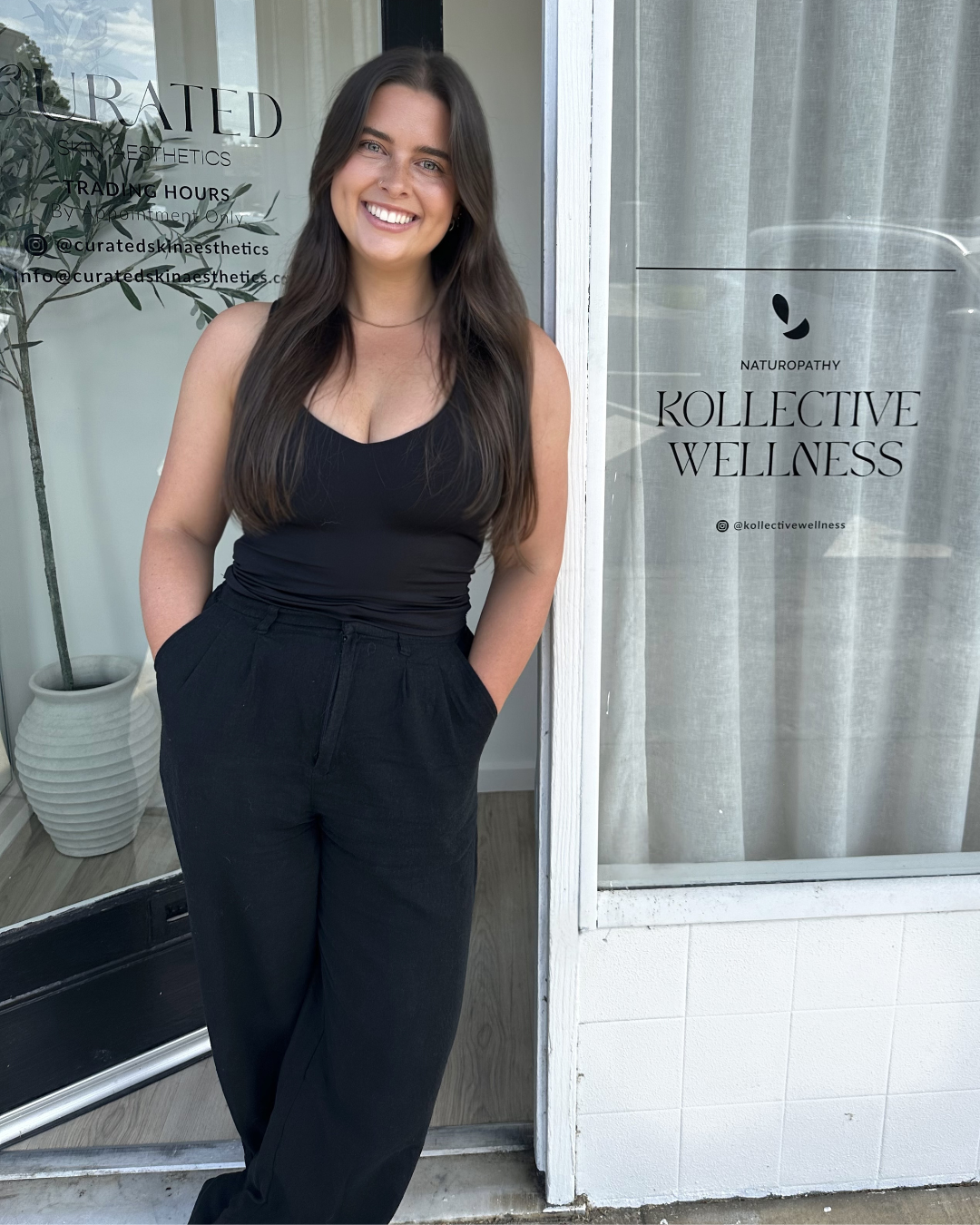
With Kayla, Clinical Naturopath at Curated Skin Aesthetics
Summer winds down, and for many of us, the skin starts to speak up.
Maybe it feels oilier than usual. Maybe that stubborn patch of rosacea has quietly crept back. Maybe you're waking up a little puffy, or breaking out in places that were clear just weeks ago.
If your skin feels more unsettled right now, you're not imagining it — and it's not just the heat.
The back-to-back celebrations, late nights, and extra glasses of wine that come with this season often leave a visible imprint. And one of the most common contributing factors I see in clinic this time of year is alcohol.
Let's be clear about something first
I'm not here to tell you to give up drinking. I don't believe you need to be perfect to have clear skin — because you don't.

But if your skin is flaring and you're trying to understand why, it's worth getting curious. Alcohol can meaningfully influence your skin's resilience and repair capacity, and understanding how gives you the power to make choices that feel informed, not restrictive.
How alcohol affects the skin
It dehydrates and weakens your barrier. Alcohol is a diuretic — it increases water loss and reduces vasopressin, the hormone that helps your body retain fluid. Even when you're trying to stay hydrated, your body may not be holding onto it effectively after drinking. The result is a compromised skin barrier that's slower to heal and more reactive to everything else.
It places extra load on the liver. Your liver processes hormones, inflammatory byproducts, and excess nutrients — all of which directly influence skin clarity. When alcohol is present, the body prioritises metabolising that first, leaving less capacity to manage other drivers of inflammation. This is especially relevant if you're dealing with hormonal acne, post-pill flares, or persistent congestion.
It depletes key skin nutrients. Even moderate alcohol consumption can lower zinc, B vitamins, vitamin A, and magnesium — nutrients that regulate oil production, support tissue healing, and keep inflammation in check. If your skin takes days to settle after a night out, nutrient depletion is often part of the reason.
You don't have to stop drinking to support your skin
In clinic, we often recommend reducing or removing alcohol temporarily during active treatment phases — particularly when we're working to calm inflammation, regulate hormones, or restore gut health. That doesn't mean permanently. It means pressing pause while the body heals, then reintroducing in a way that's genuinely supportive.
In the meantime, a few simple adjustments can make a real difference:
Eat before and during drinking to slow absorption and reduce blood sugar spikes, both of which drive inflammation. Alternate drinks with water, or sip on something mineral-rich like coconut water with a pinch of sea salt. The day after, focus on replenishing — zinc-rich foods, B vitamins, and something nourishing. Support your liver and lymph with simple habits like warm lemon water, dry body brushing, and fibre-rich meals. And where possible, build in consistent alcohol-free days to give your skin the rest it needs to repair.
Where to start if your skin is flaring
Begin by noticing. How does your skin feel after drinking? Are there patterns — breakouts, puffiness, dryness, sensitivity? Are you in a phase that needs calming, or one where you have more flexibility?
Alcohol is often one piece of the puzzle, rarely the whole picture.
Through a 1:1 naturopathy consultation, we explore the deeper layers contributing to your skin — gut health, hormones, inflammation, nutrient levels, nervous system stress — and build a personalised roadmap that meets you where you actually are.
No extremes. No judgement. Just clarity.
If you'd like to explore what your skin might be telling you about what's happening internally, I'd love to work through it with you. Book a 1:1 naturopathy consultation with me here.
